
 Español

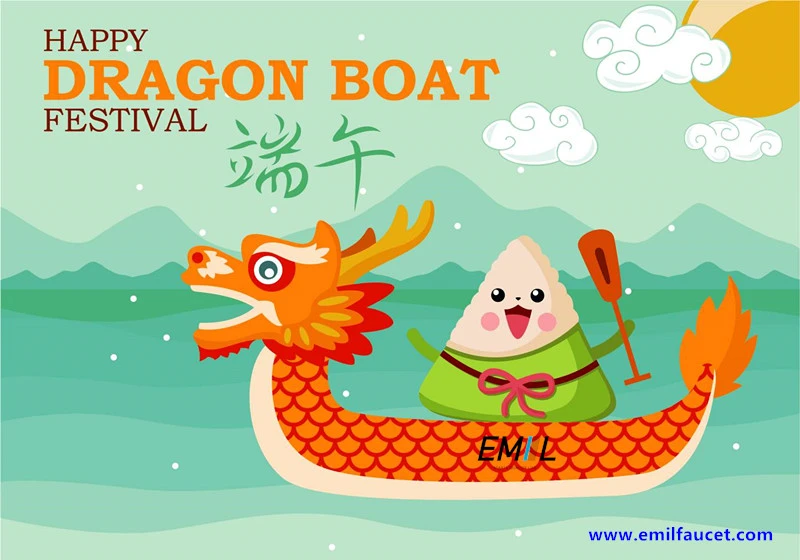
What is Dragon Boat Festival in China?
The Dragon Boat Festival (traditional Chinese: 端午節; simplified Chinese: 端午节) is a traditional holiday originating in China,
occurring near the summer solstice. The festival now occurs on the 5th day of the 5th month of the traditional Chinese calendar, which is the source of the festival's alternative name, the Double Fifth Festival.[1] The Chinese calendar is lunisolar, so the date of the festival varies from year to year on the Gregorian calendar. In 2017, it occurred on 29 May; in 2018, on 18 June; in 2019, on 7 June; and in 2020, on 25 June.
Name
The English language name for the holiday, "Dragon Boat Festival", possibly translates into two alternative Chinese names for the holiday, 龍船節 (Lóngchuánjié) and 龍舟節 (Lóngzhōujié).
The Chinese name of the festival is "端午節" (simplified Chinese: 端午节; traditional Chinese: 端午節; pinyin: Duānwǔjié) on the mainland,[2] Taiwan, and "Tuen Ng Festival" for Hong Kong, Macao, Malaysia and Singapore.[5] It is pronounced variously in different Chinese languages. In Mandarin, it is romanized as Duānwǔjié on the mainland and Taiwan; in Cantonese, it is romanized as Tuen1 Ng5 Jit3 on Hong Kong and Tung1 Ng5 Jit3 on Macao. All of these names (lit. "Opening the Fifth") refer to its original position as the first fifth-day (午日, Wǔrì) in the fifth month (五月, Wǔyuè) of the traditional Chinese calendar, which was also known as 午 (Wǔ). People's Republic of China use "Dragon Boat Festival" as the official English translation of the holiday,[6][7] while Hong Kong calls it the "Tuen Ng Festival"[5] and Macao calls it "Dragon Boat Festival (Tun Ng)" in English[8] and Festividade do Barco-Dragão (Tung Ng) in Portuguese.[9]
Among Malaysian, Singaporean, and Taiwanese Hokkien speakers, the festival is also known as the "Fifth Month Festival," the "Fifth Day Festival," and the "Dumpling Festival."
In Korea, the holiday is called Dano. It is a significant traditional holiday in Korean Culture. In North Korea it is an official holiday.
In Indonesian, the festival is known as "Peh Cun", which is derived from Hokkien (扒船; pê-chûn).
History
Superstition
The fifth lunar month is considered an unlucky month. People believed that natural disasters and illnesses are common in the fifth month. In order to get rid of the misfortune, people would put calamus, Artemisia, pomegranate flowers, Chinese ixora and garlic above the doors in the fifth of May.[10] Since the shape of calamus forms like a sword and with the strong smell of the garlic, it is believed that they can remove the evil spirits.


Other origin of Dragon Boat festival : Before the Qin Dynasty (221-206 B.C.), the fifth month of the lunar calendar was regarded as a bad month and the fifth day of the month as a bad day, and known as the Dragon Boat festival nowadays. Poisonous animals will appear starting from this days such as snakes, centipedes and scorpions as well as that people may get sick easily after this day. Therefore, during the Dragon Boat Festival, people try any way to avoid bad luck. For example, people paste pictures of the five poisonous creatures on the wall and stick needles in them. People also make paper cuttings of the five creatures and wrapped these around the wrists of their children.[11] Big ceremonies and performances developed from these practices in many areas, making the Dragon Boat Festival a day for getting rid of disease and bad luck.

A statue of Qu Yuan in Jingzhou, at the site of the former Chu capital Ying.
Decorating doors by hanging wormwood and calamus plants is an important ritual of the Dragon Boat Festival. People believe that doing so will drive evil spirits and diseases away.
Qu Yuan
Main article: Qu Yuan
The story best known in modern China holds that the festival commemorates the death of the poet and minister Qu Yuan (c. 340–278 BC) of the ancient state of Chu during the Warring States period of the Zhou Dynasty.A cadet member of the Chu royal house, Qu served in high offices. However, when the king decided to ally with the increasingly powerful state of Qin, Qu was banished for opposing the alliance and even accused of treason.[12] During his exile, Qu Yuan wrote a great deal of poetry. Twenty-eight years later, Qin captured Ying, the Chu capital. In despair, Qu Yuan committed suicide by drowning himself in the Miluo River.
It is said that the local people, who admired him, raced out in their boats to save him, or at least retrieve his body. This is said to have been the origin of dragon boat races. When his body could not be found, they dropped balls of sticky rice into the river so that the fish would eat them instead of Qu Yuan's body. This is said to be the origin of zongzi.


